


Many small and mid-sized distribution businesses are not struggling because they lack software.
In most cases, they already operate across multiple systems:
- ERP platforms
- warehouse tools
- dispatch workflows
- inventory systems
- spreadsheets layered around operations
The real challenge is something else.
Operational decisions remain fragmented across disconnected systems, manual coordination layers, and delayed visibility.
And as distribution environments become more complex, that operational latency becomes increasingly expensive.
The Real Problem Is Not Inventory. It Is Coordination.
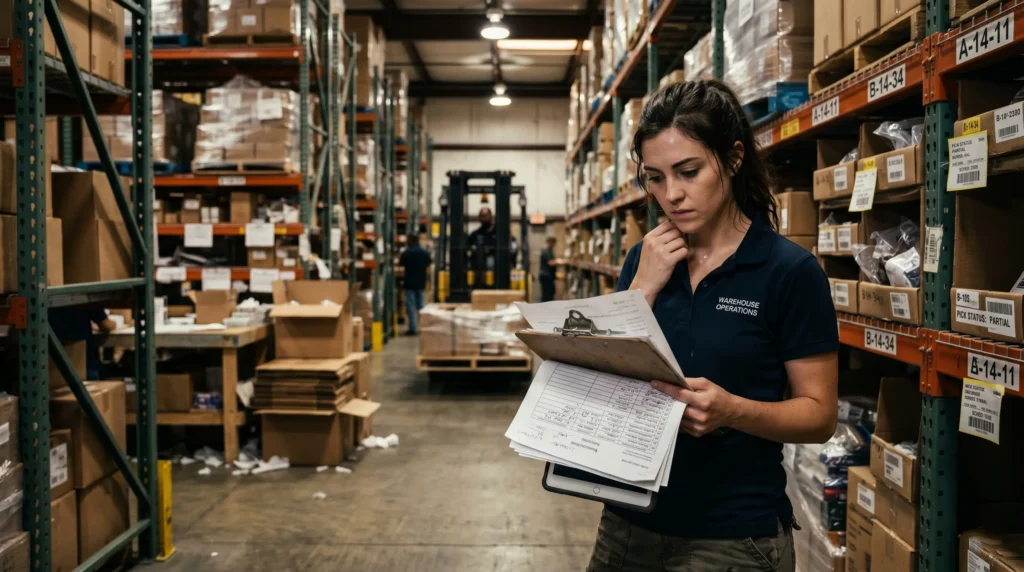
For many distribution businesses, the operational questions are familiar:
- Which warehouse currently has available stock?
- Which shipment is leaving tomorrow?
- Which orders can still be grouped into the next route?
- What inventory is aging without movement?
- Which customer order should be prioritized first?
- What delivery window can realistically be committed?
Historically, these operational decisions were handled through:
- custom ERP logic
- dispatch coordination
- warehouse procedures
- scheduled jobs
- reporting workflows
- operational experience
And for many years, those systems worked extremely well.
Businesses solved these challenges through traditional development, tightly coupled workflows, ERP customizations, and operational logic layers.
But the direction the space is moving toward now is fundamentally different.
Distribution Operations Are Becoming Orchestrated
The next operational layer is no longer just automation.
It is orchestration.
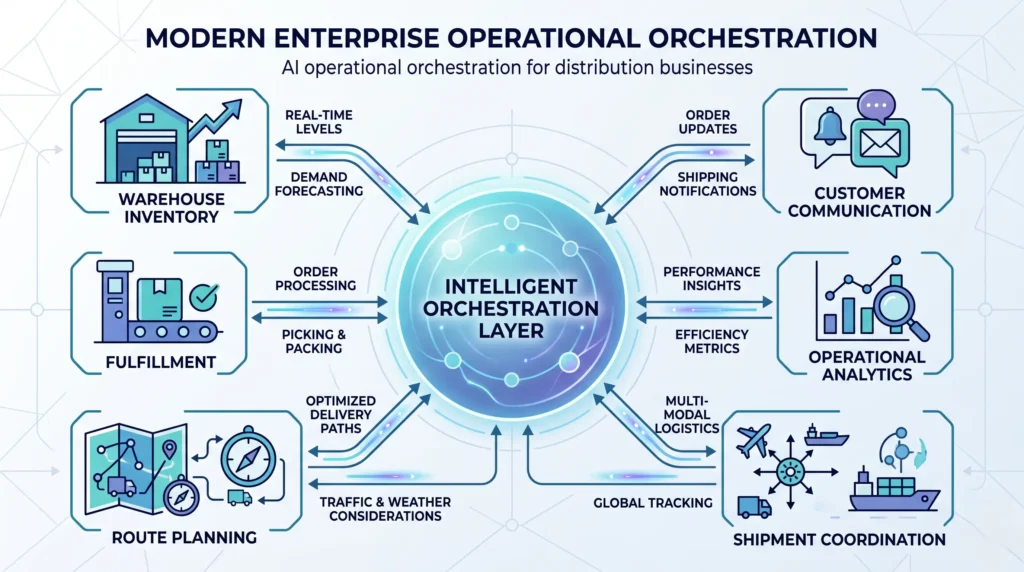
The ability for systems to dynamically coordinate:
- inventory visibility
- shipment timing
- route planning
- fulfillment prioritization
- warehouse activity
- customer communication
across operational systems in real time.
This changes how businesses think about operational workflows entirely.
Instead of static workflows reacting after events occur, systems increasingly begin coordinating operational decisions dynamically as operational events happen.
Operational Visibility Is Becoming a Competitive Advantage
B2B customer expectations are changing quickly.
Businesses increasingly expect:
- accurate delivery windows
- real-time shipment visibility
- proactive communication
- faster fulfillment coordination
- reliable inventory awareness
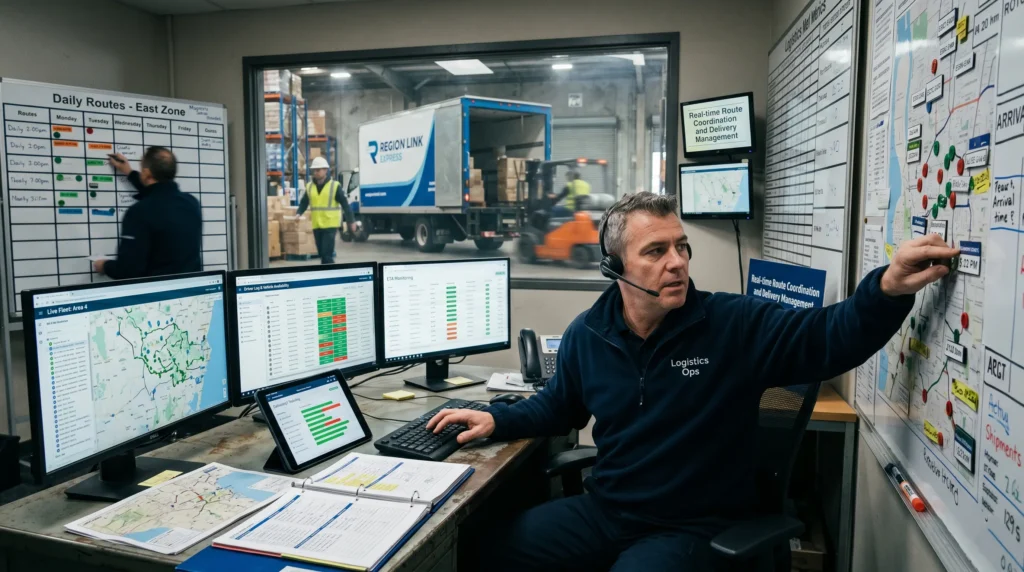
And internally, operational teams increasingly need visibility into:
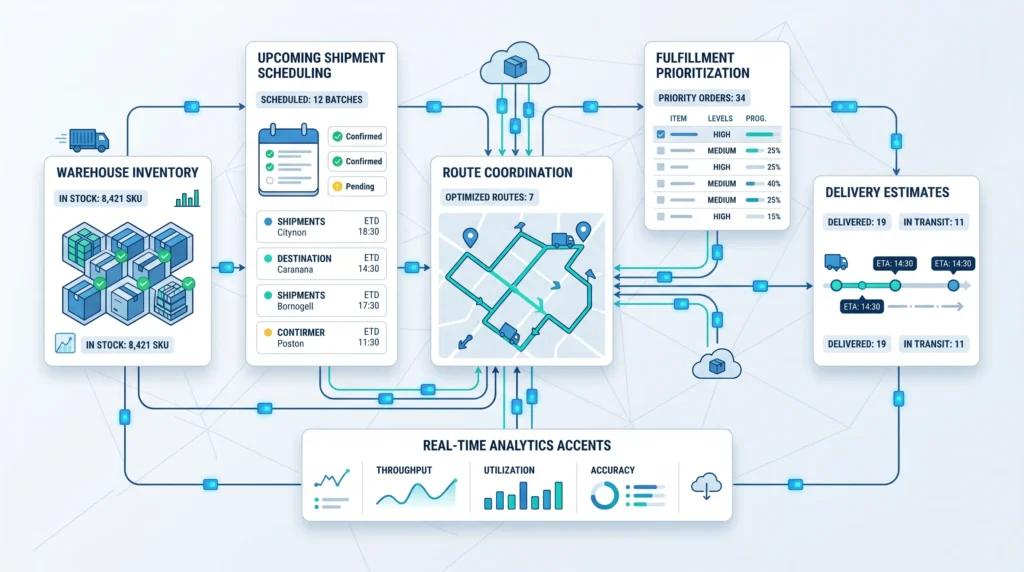
- which products are allocated where
- what inventory is scheduled for upcoming routes
- what can be fulfilled immediately
- what should be prioritized operationally
The businesses capable of reducing operational blind spots may gain significant operational advantages over businesses still coordinating manually across disconnected systems.
Where AI Begins Changing the Conversation
This is where the discussion around AI becomes more practical.
The future is likely not AI replacing operational teams.
The future is AI coordinating operational workflows across systems.
Examples already beginning to emerge include:
- dynamically identifying optimal fulfillment locations
- grouping deliveries based on route overlap
- predicting inventory movement patterns
- estimating delivery windows based on operational variables
- prioritizing shipments based on warehouse constraints
- orchestrating customer communication automatically
The important shift is this:
The value is no longer only in automation.
It is in reducing the time between operational events, decisions, and execution.
AI Is Moving Beyond Support Functions
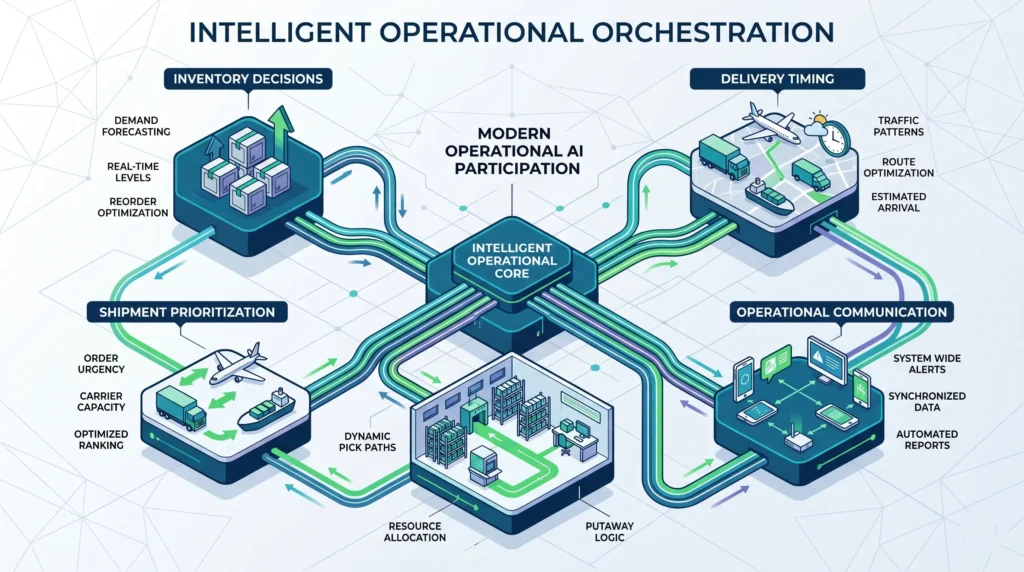
For years, most business discussions around AI focused on relatively isolated tasks:
- chatbots
- booking assistants
- customer support automation
- basic workflow automation
Those use cases still exist.
But the operational direction is shifting quickly.
AI is increasingly moving closer to operational participation rather than isolated assistance.
The difference is important.
Instead of only responding to customer questions or handling support tickets, operational systems are beginning to participate directly in:
- fulfillment coordination
- shipment prioritization
- route optimization
- inventory visibility
- operational recommendations
- workflow orchestration
The role of AI is gradually shifting from:
“assistive interface”
to:
“operational coordination layer”
That changes how businesses may eventually think about daily operations.
Operational Participation Instead of Isolated Automation
The future operational model may not involve AI replacing operational teams.
It may involve AI systems actively coordinating alongside operational teams by reducing latency between:
- inventory events
- warehouse decisions
- fulfillment timing
- delivery coordination
- customer communication
This is where orchestration becomes significantly more important than isolated automation.
AI is increasingly becoming less of a front-end assistant and more of an operational participant within connected business ecosystems.
Why This Shift Is Becoming More Relevant
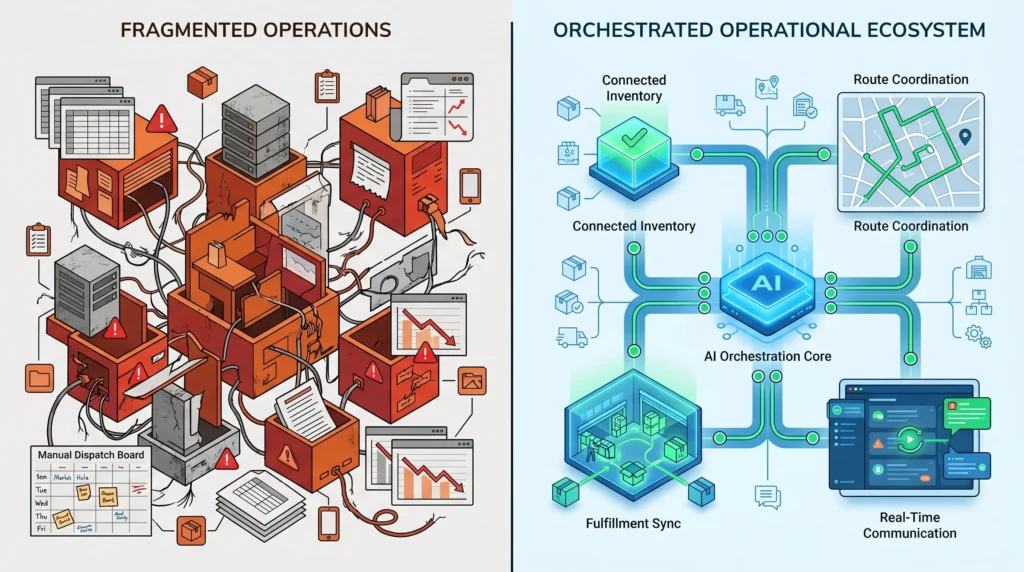
Many distribution businesses today operate across disconnected operational layers:
- ERP system in one environment
- warehouse coordination elsewhere
- dispatch handled manually
- customer updates separated from fulfillment systems
- reporting delayed across multiple platforms
The result is not always operational failure.
It is operational friction.
That friction compounds through:
- delayed decisions
- manual coordination
- fulfillment inefficiencies
- inventory blind spots
- communication gaps
- duplicated operational effort
This is one reason businesses are increasingly shifting from asking:
“Do we need another app?”
to:
“How do we reduce operational fragmentation?”
What Previously Required Heavy Custom Development Is Changing
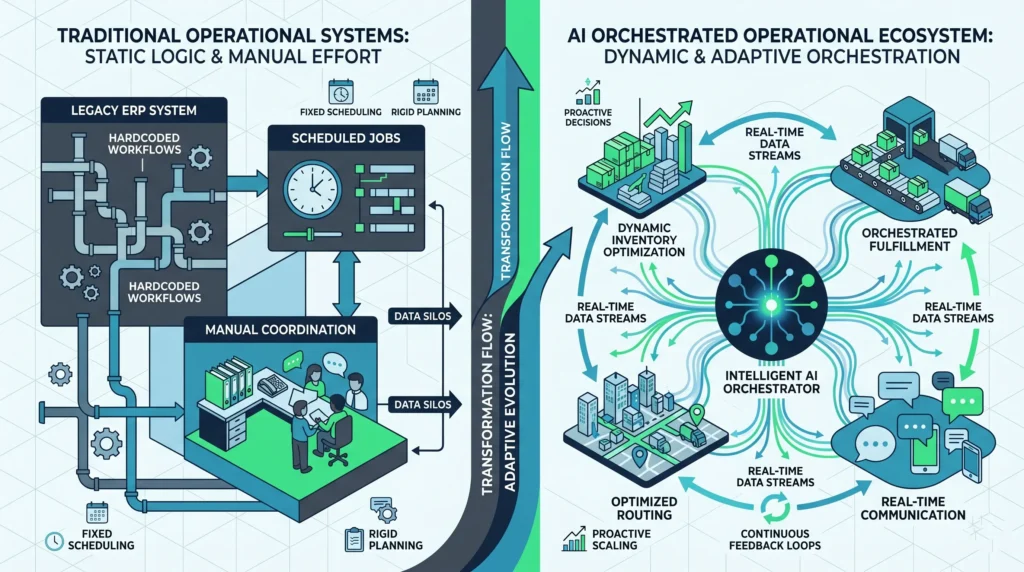
For years, many of these operational coordination challenges were solved through:
- ERP customizations
- warehouse logic
- dispatch rules
- scheduled integrations
- hardcoded workflows
- operational scripting and process layers
Businesses operating on systems such as Microsoft Dynamics 365 Business Central, legacy NAV environments, GP systems, and other operational platforms often relied heavily on traditional development approaches to coordinate operations.
And in many cases, these systems worked extremely well.
But operational systems are increasingly shifting from static workflows toward orchestrated operational ecosystems capable of coordinating actions dynamically across inventory, fulfillment, routing, communication, and reporting layers.
That is a very different architectural direction.
The Microsoft Ecosystem Quietly Fits Into This Shift
One reason this conversation is accelerating is because cloud ecosystems are beginning to support orchestration more naturally.
With Azure, Power Platform, AI orchestration capabilities, workflow layers, and operational systems increasingly operating together, businesses are beginning to explore operational coordination at a level that previously required extensive custom engineering.
Operational systems like:
- Microsoft Dynamics 365 Business Central
- legacy NAV environments
- GP systems
- warehouse platforms
- logistics tools
increasingly become operational data layers connected into broader orchestration systems rather than isolated applications.
This creates possibilities for:
- real-time operational coordination
- dynamic fulfillment workflows
- intelligent routing visibility
- AI assisted operational decision making
- automated communication layers
without creating entirely disconnected operational ecosystems.
This Is Not About More Software
Many distribution businesses are not looking for more applications.
They are trying to reduce:
- operational fragmentation
- coordination latency
- disconnected workflows
- integration overhead
- delayed operational visibility
The future operational advantage may not come from adding more systems.
It may come from reducing the operational distance between:
- inventory events
- fulfillment decisions
- route coordination
- warehouse execution
- customer communication
The Shift Is Already Happening
We have worked on many of these operational coordination challenges previously through traditional systems, ERP customizations, workflow driven development, and operational logic layers.
But the direction the space is moving toward now is fundamentally different.
Businesses are beginning to move from static operational workflows toward dynamically orchestrated operational systems capable of coordinating inventory visibility, routing decisions, fulfillment timing, and operational communication in real time.
The question is no longer:
“Can this be built?”
The question is:
“Are businesses operationally ready for where these systems are already heading?”
Because this shift is no longer theoretical.
The orchestration layer is already forming across cloud infrastructure, operational systems, AI workflows, and connected business ecosystems.
Related Insights
Businesses exploring operational modernization and ecosystem-driven ERP strategy may also find value in:
- Why Businesses Are Re-Evaluating ERP Around the Microsoft Ecosystem
- Should You Move from Dynamics NAV or GP to Business Central
- From COBOL to Business Central: A Strategic ERP Migration Case Study
Each explores how operational systems are increasingly evolving from isolated applications into connected operational ecosystems.
Final Thought
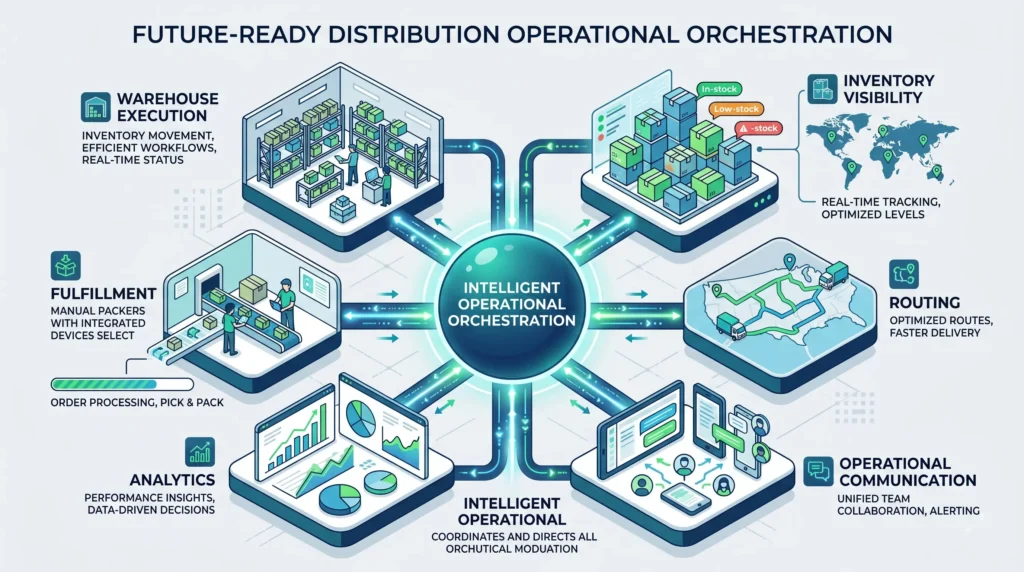
The future may not belong to businesses with the most software.
It may belong to businesses capable of reducing the distance between operational events, decisions, and execution.
That is where operational orchestration may quietly become the next competitive advantage for distribution businesses.
CTA
If your business is beginning to explore whether these types of operational coordination systems are possible within your environment, this is exactly where the next generation of operational architecture conversations are starting.
And in many cases, the shift is already underway.