
Data is one of the most valuable assets within any organization. Secure backup and disaster recovery solutions help businesses protect critical information, maintain operational continuity, and recover quickly from cyber attacks, hardware failures, human error, and unexpected disruptions. A well designed backup strategy ensures your organization remains resilient when business continuity is tested.
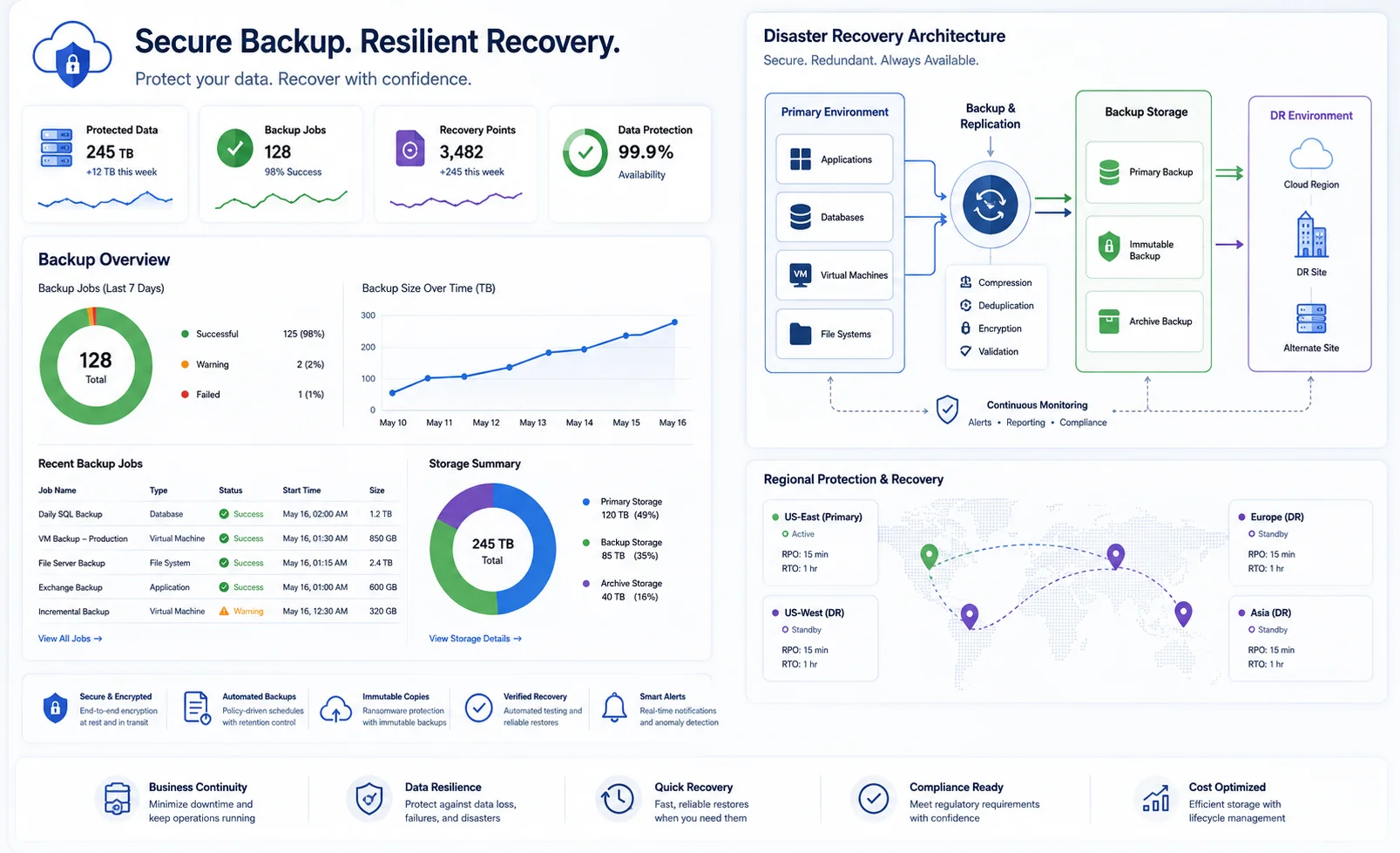
Backup and disaster recovery solutions help organizations protect business data, applications, and infrastructure against unexpected disruptions. While backups preserve critical information, disaster recovery strategies ensure systems and operations can be restored quickly when incidents occur.
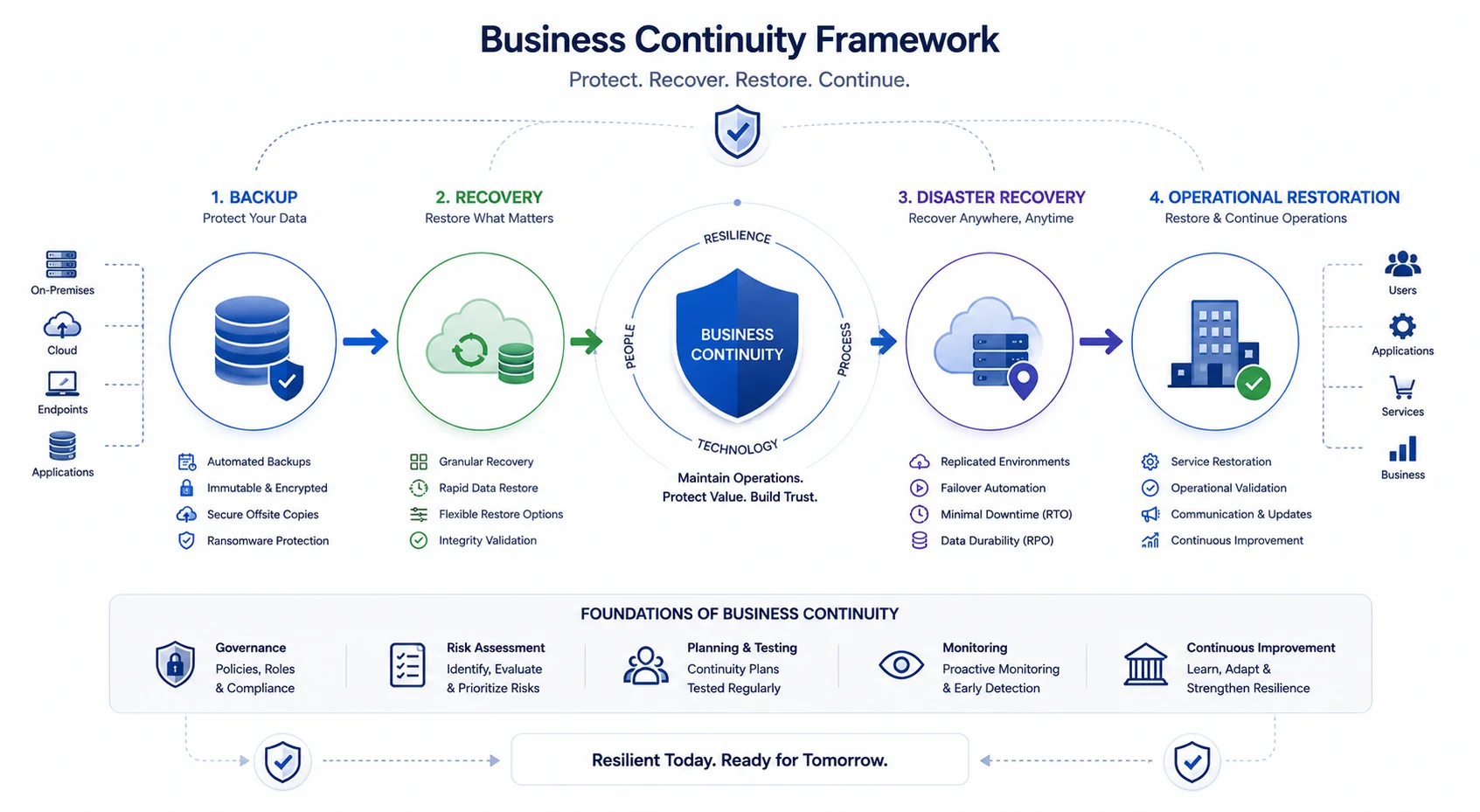
Organizations today rely heavily on digital systems to support daily operations, customer interactions, financial management, and decision making. Even a short period of downtime can create significant operational and financial consequences.
Data loss can occur for many reasons including ransomware attacks, accidental deletion, hardware failures, software corruption, natural disasters, and infrastructure outages. Without reliable backup and recovery capabilities, recovering from these events becomes increasingly difficult and expensive.
Modern backup strategies go beyond simply copying files. Organizations must ensure backups are secure, recoverable, regularly tested, and aligned with business continuity objectives. Recovery procedures should support both data restoration and operational recovery.
A comprehensive backup and disaster recovery strategy provides confidence that critical systems, business information, and operational processes can be restored when unexpected events occur.
Effective backup and recovery strategies combine technology, planning, and operational readiness to support business continuity.
Protect critical business information through structured backup policies, scheduling, retention management, and secure storage practices.
Develop recovery strategies that define how systems, applications, and business operations will be restored following disruption.
Leverage cloud based backup technologies that improve accessibility, redundancy, and recovery flexibility.
Verify backup integrity and ensure recovery procedures function as expected before an actual incident occurs.
Strengthen resilience through protected backup environments, recovery planning, and recovery validation processes.
Align recovery objectives with operational priorities to reduce downtime and maintain critical business functions.
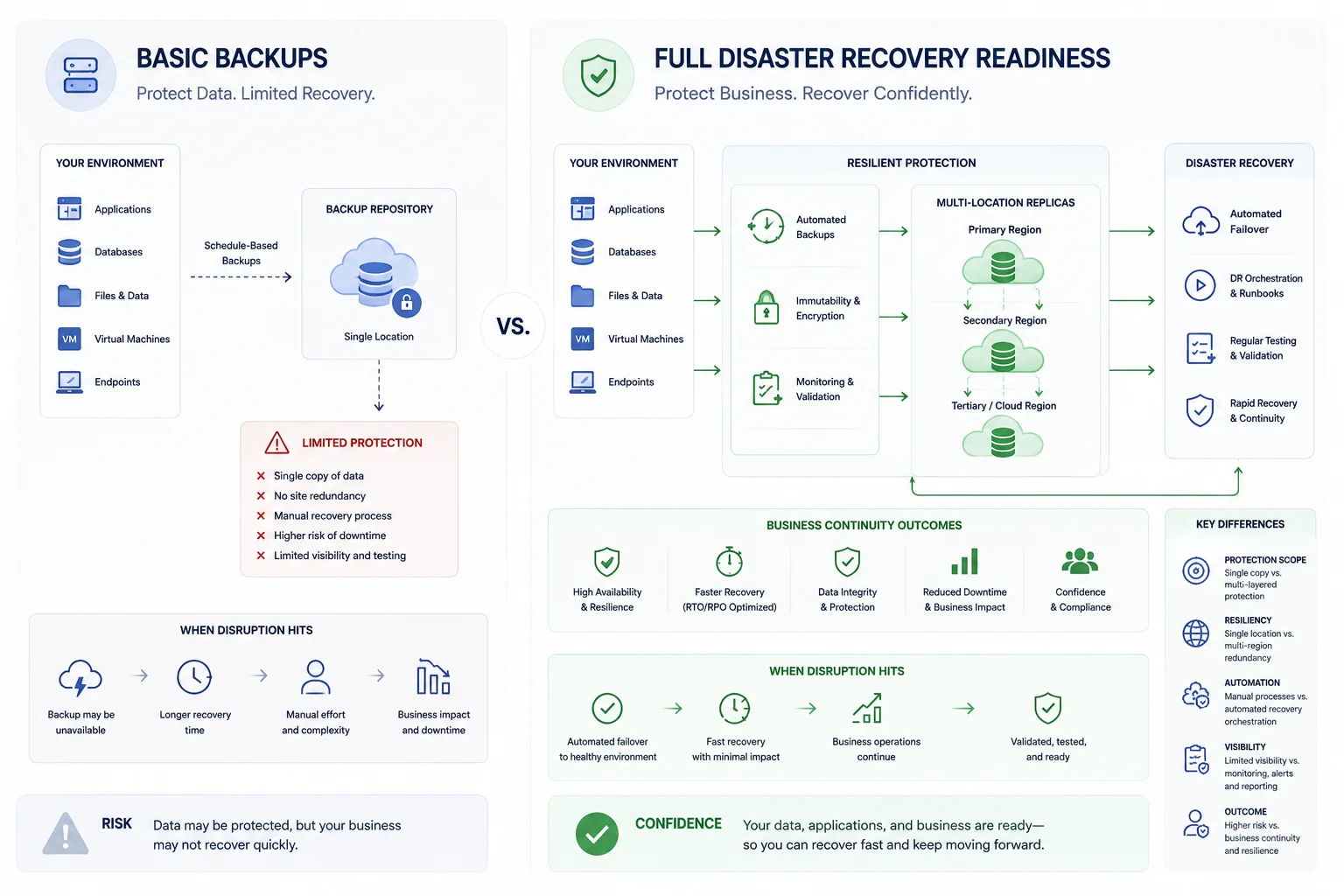
Many organizations assume backups alone provide sufficient protection. However, successful recovery requires planning, testing, and clearly defined recovery procedures that support business continuity.
| Capability | Basic Backup Approach | Backup & Disaster Recovery Strategy |
|---|---|---|
| Data Protection | ✕ File backups only | ✓ Comprehensive protection |
| Recovery Planning | ✕ Limited documentation | ✓ Structured recovery procedures |
| Backup Validation | ✕ Infrequent testing | ✓ Regular testing and validation |
| Recovery Speed | ✕ Uncertain timelines | ✓ Defined recovery objectives |
| Business Continuity | ✕ Limited support | ✓ Operational resilience |
| Disaster Readiness | ✕ Reactive approach | ✓ Proactive preparedness |
Backup and disaster recovery solutions support organizations that require reliable access to systems, applications, and critical business information.
Protect production systems, operational data, and ERP environments that support manufacturing operations.
Distribution & WarehousingEnsure inventory management, warehouse operations, and logistics systems remain recoverable during disruptions.
Retail & eCommerceProtect customer data, transaction history, order management systems, and digital commerce platforms.
Food & BeverageSupport operational continuity while protecting inventory, production, and compliance related information.
Protect client information, business applications, and critical operational data.
Support recovery readiness while maintaining compliance and data protection requirements.
Whether you're evaluating existing backup processes, improving disaster recovery planning, or strengthening ransomware resilience, we help organizations build recovery strategies that protect critical operations and business data.
Backups focus on preserving data, while disaster recovery focuses on restoring systems, applications, and business operations after disruption.
Backups should be tested regularly to verify data integrity and ensure recovery procedures perform as expected.
Backups play a critical role in ransomware recovery. However, backup security, isolation, and recovery testing are equally important components of ransomware resilience.
A disaster recovery plan defines the procedures, responsibilities, technologies, and recovery objectives used to restore systems and operations after a disruption.
When properly configured, cloud backup solutions provide secure storage, redundancy, encryption, and recovery capabilities that strengthen data protection strategies.
Manufacturing, distribution, retail, healthcare, professional services, food and beverage, and any organization that relies on technology and business data can benefit from structured backup and recovery planning.