
Move beyond traditional infrastructure and build a cloud foundation designed for growth. Microsoft Azure helps organizations modernize applications, improve security, strengthen disaster recovery, and scale operations using one of the world's most trusted cloud platforms.
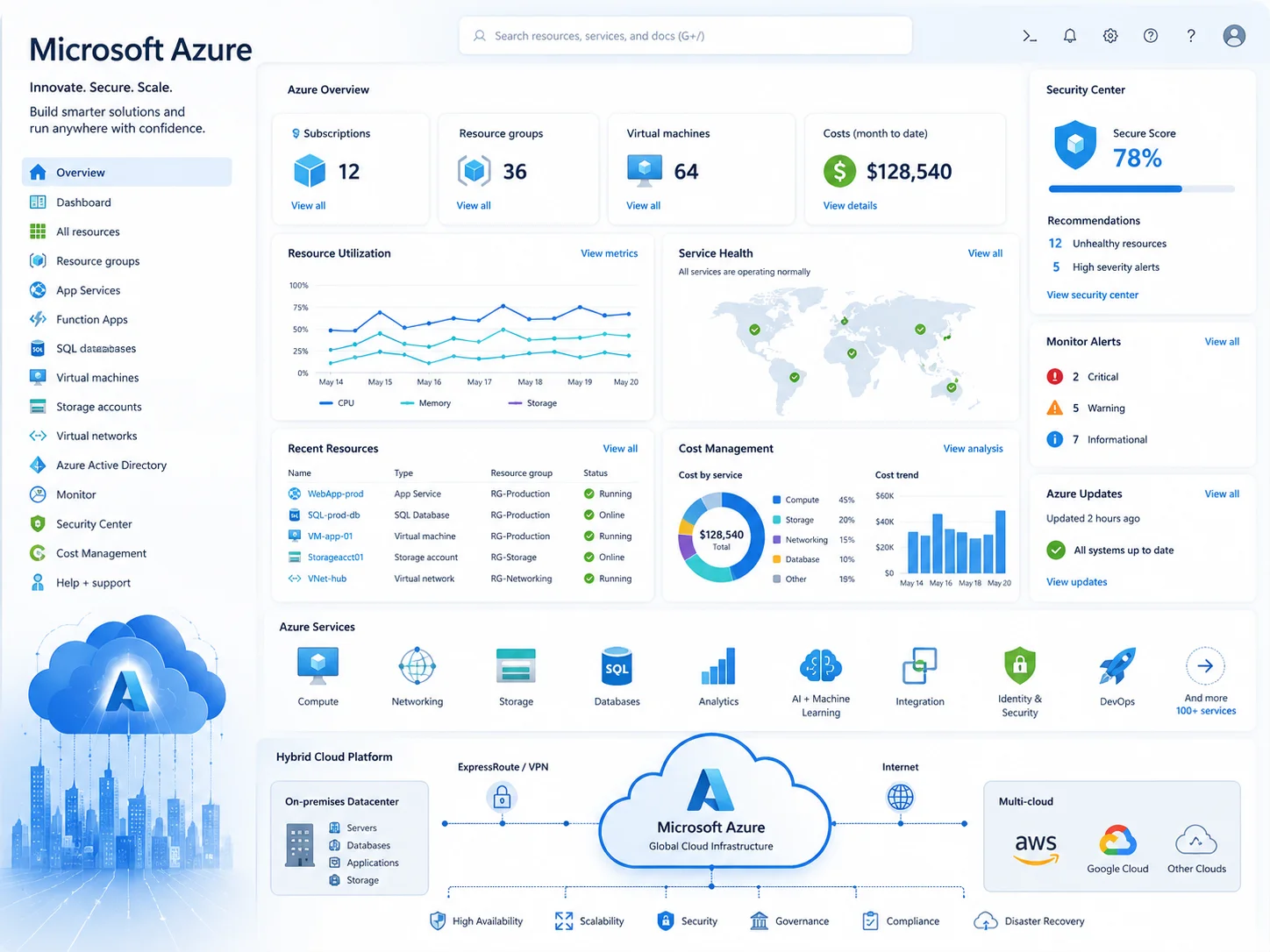
Cloud computing allows organizations to access computing resources such as servers, storage, databases, networking, security, and applications through the internet rather than purchasing and maintaining physical infrastructure. It provides flexibility, scalability, and cost efficiency while reducing operational complexity.
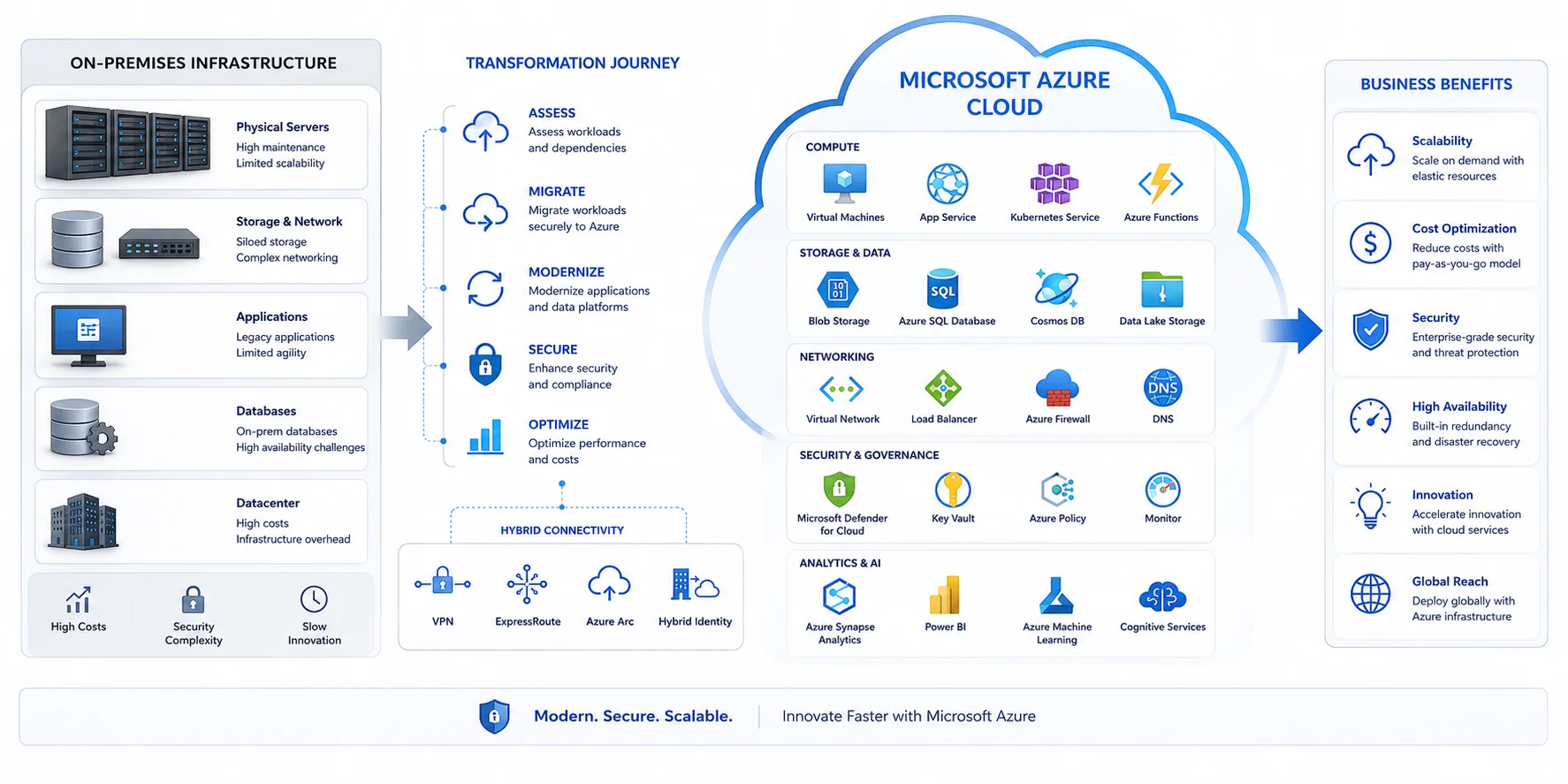
Technology leaders today face growing pressure to support digital transformation initiatives while maintaining security, controlling infrastructure costs, and ensuring business continuity.
Traditional on-premises environments often struggle to keep pace with modern business requirements. Hardware refresh cycles, capacity limitations, disaster recovery planning, and cybersecurity concerns consume valuable IT resources and slow innovation.
Microsoft Azure provides a secure and scalable cloud platform that enables organizations to modernize infrastructure, deploy applications faster, improve resilience, and support future growth without the limitations of traditional data centers.
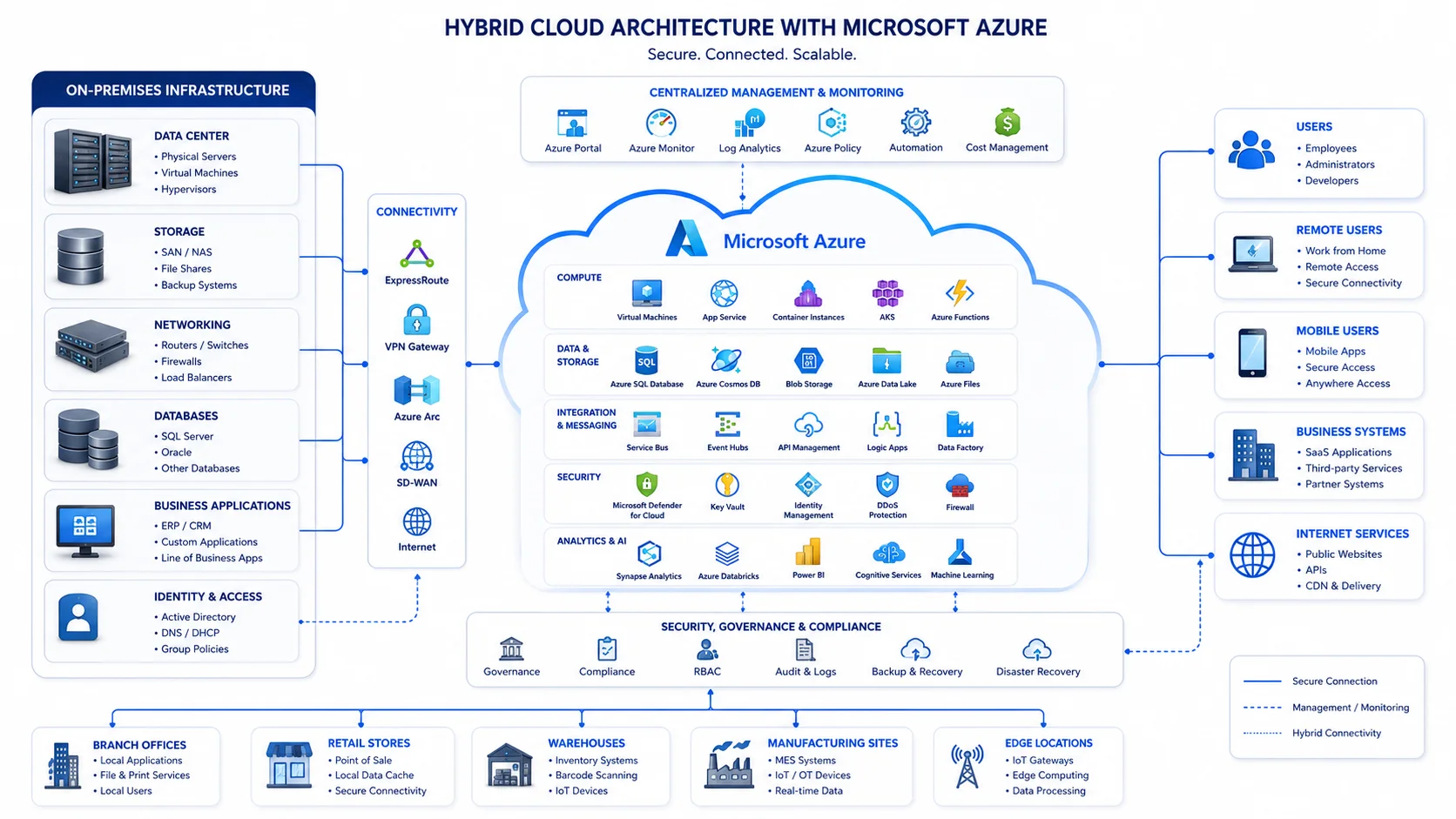
Whether you're migrating legacy applications, implementing hybrid cloud architecture, building AI-powered solutions, or strengthening cybersecurity posture, Azure provides the foundation required to support modern business operations.
Built on Microsoft's global cloud infrastructure, Azure delivers enterprise-grade reliability, advanced security controls, and seamless integration with Microsoft 365, Dynamics 365, Power Platform, and thousands of third-party applications.
Six core capabilities covering infrastructure, security, resilience, data, and AI — all available on demand.
Deploy virtual machines, storage, networking, and compute resources on demand without investing in physical hardware.
Connect on-premises systems with Azure cloud services to create flexible hybrid environments that support existing investments while enabling modernization.
Protect users, applications, and data through Microsoft Entra ID, multi-factor authentication, zero trust architecture, threat detection, and advanced security controls.
Reduce business risk with automated backups, geo-redundancy, disaster recovery planning, and business continuity solutions.
Store, process, and analyze large volumes of data while gaining actionable insights through advanced analytics and reporting capabilities.
Build intelligent applications using Azure AI services, machine learning models, automation tools, and generative AI technologies.
Many organizations still rely on aging infrastructure that requires significant maintenance, capital investment, and operational overhead. Azure offers a modern alternative designed for agility and growth.
| Traditional Infrastructure | Microsoft Azure | |
|---|---|---|
| Hardware | ✕Physical servers | ✓Cloud infrastructure |
| Scalability | ✕Limited capacity | ✓On-demand scaling |
| Disaster Recovery | ✕Expensive secondary sites | ✓Built-in resilience |
| Security Updates | ✕Manual management | ✓Continuous updates |
| Capital Investment | ✕Large upfront costs | ✓Consumption-based pricing |
| Deployment Speed | ✕Weeks or months | ✓Minutes or hours |
Microsoft Azure supports businesses ranging from growing mid-market companies to global enterprises with complex infrastructure requirements.
Modernize operational systems, support IoT initiatives, and improve production visibility.
Protect sensitive data while supporting compliance, analytics, and patient-focused applications.
Strengthen security, improve resilience, and support regulatory requirements.
Scale digital experiences, support seasonal demand fluctuations, and improve operational performance.
Improve infrastructure reliability while supporting supply chain visibility and operational analytics.
Build, deploy, and scale applications faster using modern cloud-native services.
Whether you're planning a cloud migration, modernizing legacy systems, improving cybersecurity, or exploring AI initiatives, we help determine the right Azure roadmap for your organization.
Microsoft Azure is Microsoft's cloud computing platform that provides infrastructure, security, networking, data, analytics, AI, and application services through a global network of cloud data centers.
Yes. Azure includes enterprise-grade security features such as identity management, encryption, threat detection, compliance certifications, and zero trust security capabilities.
Yes. Azure is one of the leading hybrid cloud platforms, allowing organizations to connect on-premises systems with cloud resources while maintaining operational flexibility.
Azure uses a consumption-based pricing model where organizations pay for the resources they use rather than purchasing physical infrastructure upfront.
Yes. Azure provides backup, replication, disaster recovery, and business continuity solutions that help organizations reduce downtime and improve resilience.
Yes. Azure integrates seamlessly with Microsoft's broader ecosystem, including Dynamics 365, Microsoft 365, Power Platform, and numerous third-party applications.