
Cyber attacks can disrupt operations, compromise critical systems, and place organizations at significant financial risk. Our ransomware recovery services help businesses contain threats, restore operations, recover data, and strengthen resilience against future attacks while minimizing downtime and operational disruption.
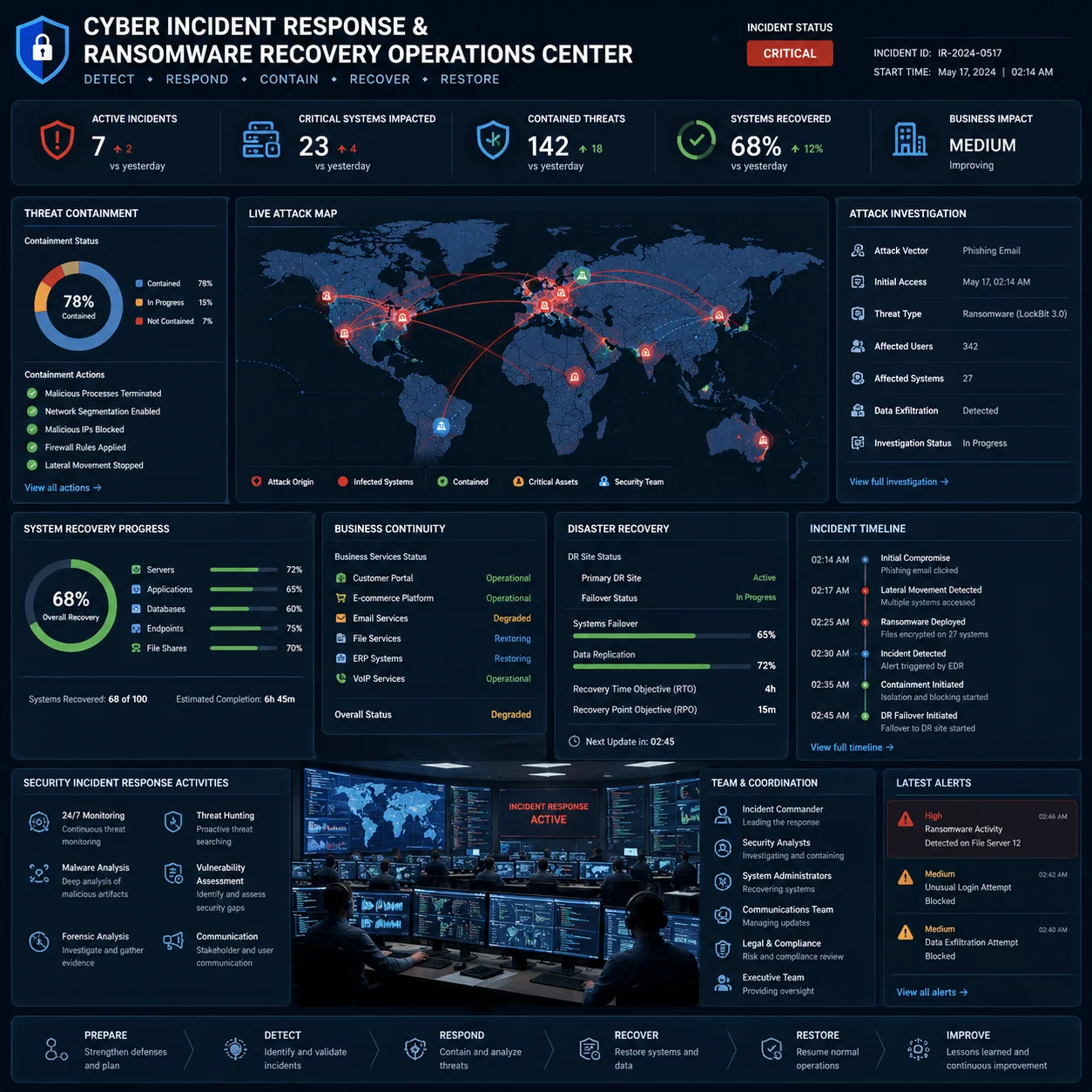
Ransomware recovery is the process of identifying, containing, and recovering from cyber attacks that encrypt systems, disrupt operations, or compromise critical business data. Effective recovery combines incident response, system restoration, data recovery, security hardening, and business continuity planning to help organizations resume operations as quickly as possible.
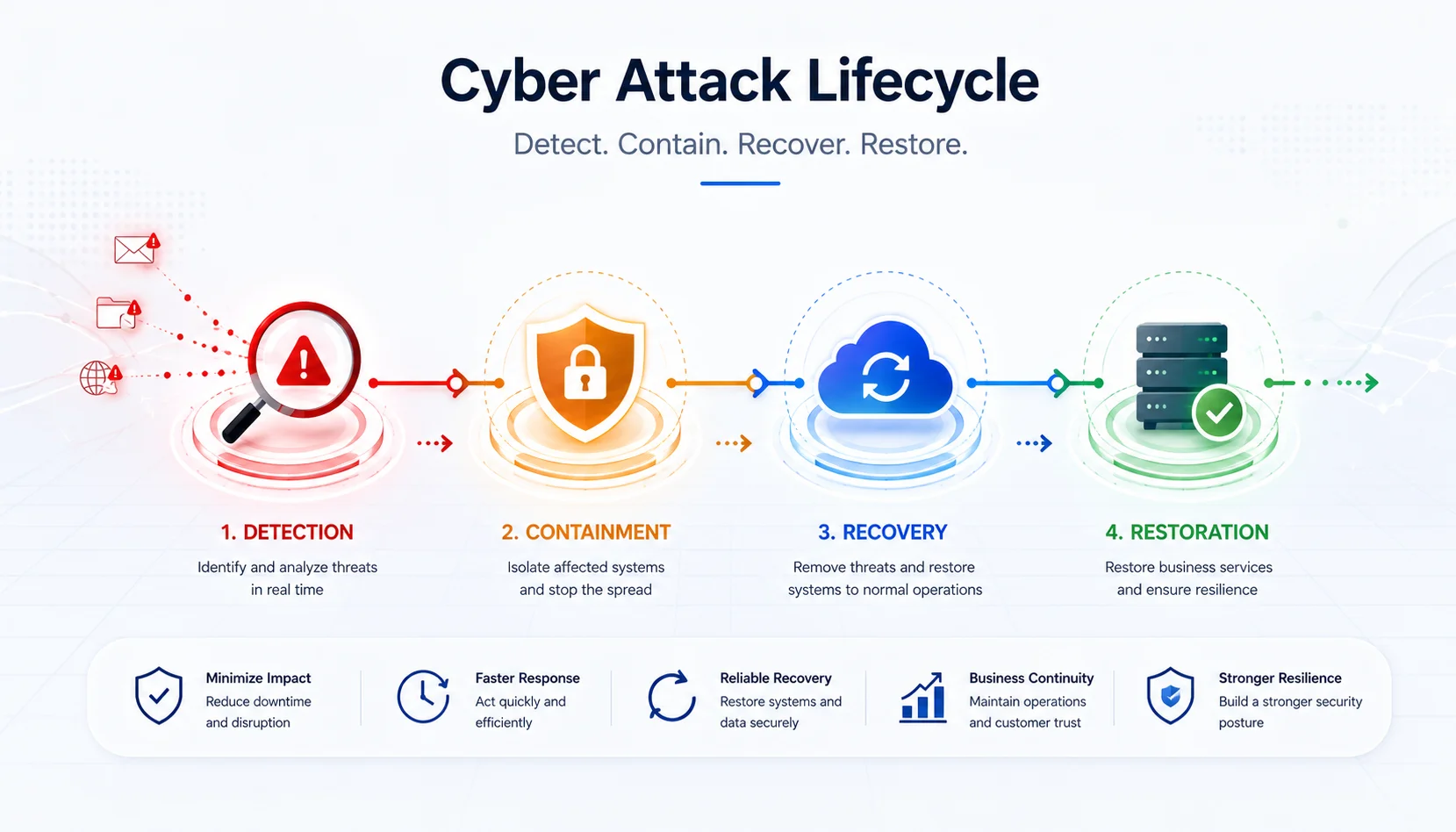
Cyber threats have evolved significantly in recent years, with ransomware attacks becoming one of the most disruptive risks facing organizations today. A successful attack can halt operations, impact customer service, compromise sensitive information, and create significant financial consequences.
Many organizations discover weaknesses in their recovery processes only after an incident occurs. Missing backups, undocumented recovery procedures, and insufficient visibility into affected systems can dramatically increase downtime and recovery costs.
A structured recovery strategy helps organizations respond more effectively during security incidents. By combining incident response planning, recovery procedures, backup validation, and security controls, businesses can reduce operational disruption and restore critical systems more efficiently.
Recovery is not only about restoring technology. It is about protecting business continuity, maintaining customer confidence, and ensuring organizations can continue operating despite unexpected disruptions.
Successful recovery requires more than restoring files. Organizations need a coordinated approach that combines technical recovery, operational continuity, and long term resilience.
Develop response procedures that help teams identify, contain, and manage security incidents more effectively.
Restore systems, recover data, and return critical operations to service following ransomware attacks.
Establish processes that help maintain essential business functions during disruptive events.
Design recovery frameworks that support rapid restoration of infrastructure, applications, and business data.
Verify that backups are recoverable and recovery procedures perform as expected during an actual incident.
Identify vulnerabilities, strengthen controls, and reduce the likelihood of future attacks.
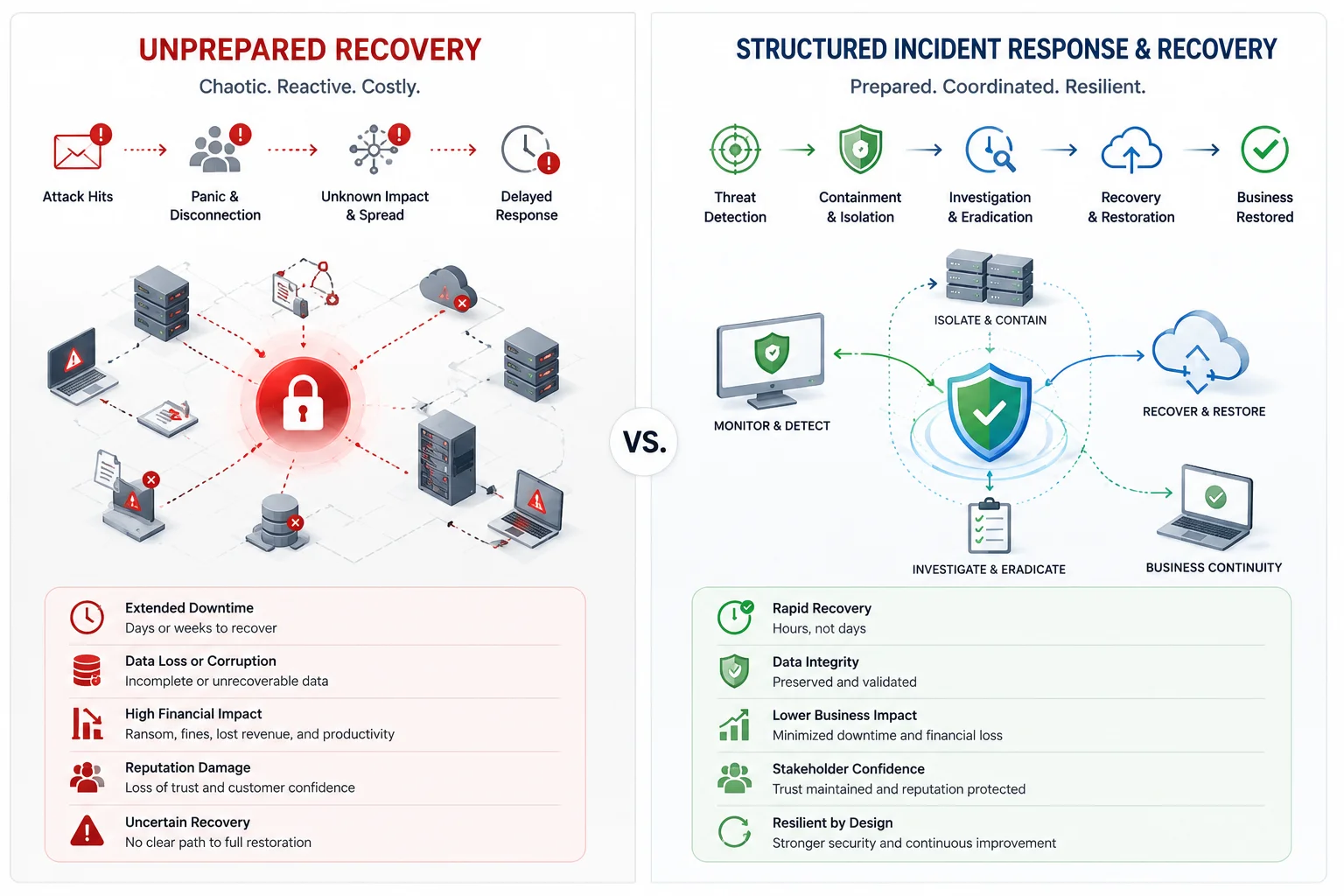
Organizations with established recovery strategies are typically able to restore operations faster and reduce business disruption when security incidents occur.
| Capability | Reactive Recovery | Prepared Recovery |
|---|---|---|
| Incident Response | ✕ Ad hoc actions | ✓ Defined procedures |
| Backup Readiness | ✕ Unknown status | ✓ Tested regularly |
| Recovery Time | ✕ Extended downtime | ✓ Faster restoration |
| Business Continuity | ✕ Significant disruption | ✓ Improved resilience |
| Security Visibility | ✕ Limited understanding | ✓ Clear recovery roadmap |
| Operational Impact | ✕ Higher risk | ✓ Better preparedness |
Cyber security recovery services support organizations that depend on continuous operations, data availability, and business resilience.
Protect production systems, operational technology, and critical business applications from prolonged disruption.
Distribution & WarehousingMaintain supply chain visibility, inventory management, and fulfillment operations during recovery events.
Retail & eCommerceProtect customer data, commerce operations, and transaction systems from business interruption.
Food & BeverageSupport operational continuity while protecting inventory, production schedules, and regulatory compliance requirements.
Protect business critical applications, client information, and operational workflows.
Improve recovery readiness while supporting compliance and data protection requirements.
Whether you are developing a recovery strategy, validating existing recovery processes, or responding to an active security incident, we help organizations improve resilience and reduce operational risk.
Ransomware recovery is the process of restoring systems, recovering data, and returning business operations to normal following a ransomware attack or security incident.
Backups are one of the most important components of a recovery strategy. Validated backups can significantly reduce downtime and improve recovery outcomes.
Incident response focuses on identifying, containing, and managing security incidents, while disaster recovery focuses on restoring systems, applications, and data after disruption.
Recovery plans should be reviewed and tested regularly to ensure procedures remain effective and recovery objectives can be achieved.
Recovery efforts often include security assessments and remediation activities that strengthen defenses and reduce future risk.
Manufacturing, distribution, retail, healthcare, professional services, food and beverage, and any organization that depends on continuous access to business systems can benefit from recovery planning.