
Manufacturers face increasing pressure to improve efficiency, manage supply chain disruptions, control inventory costs, and meet growing customer expectations. S-Metric helps manufacturers modernize operations through ERP consulting, supply chain optimization, forecasting, warehouse management, commerce integration, and technology solutions designed to support long term growth.
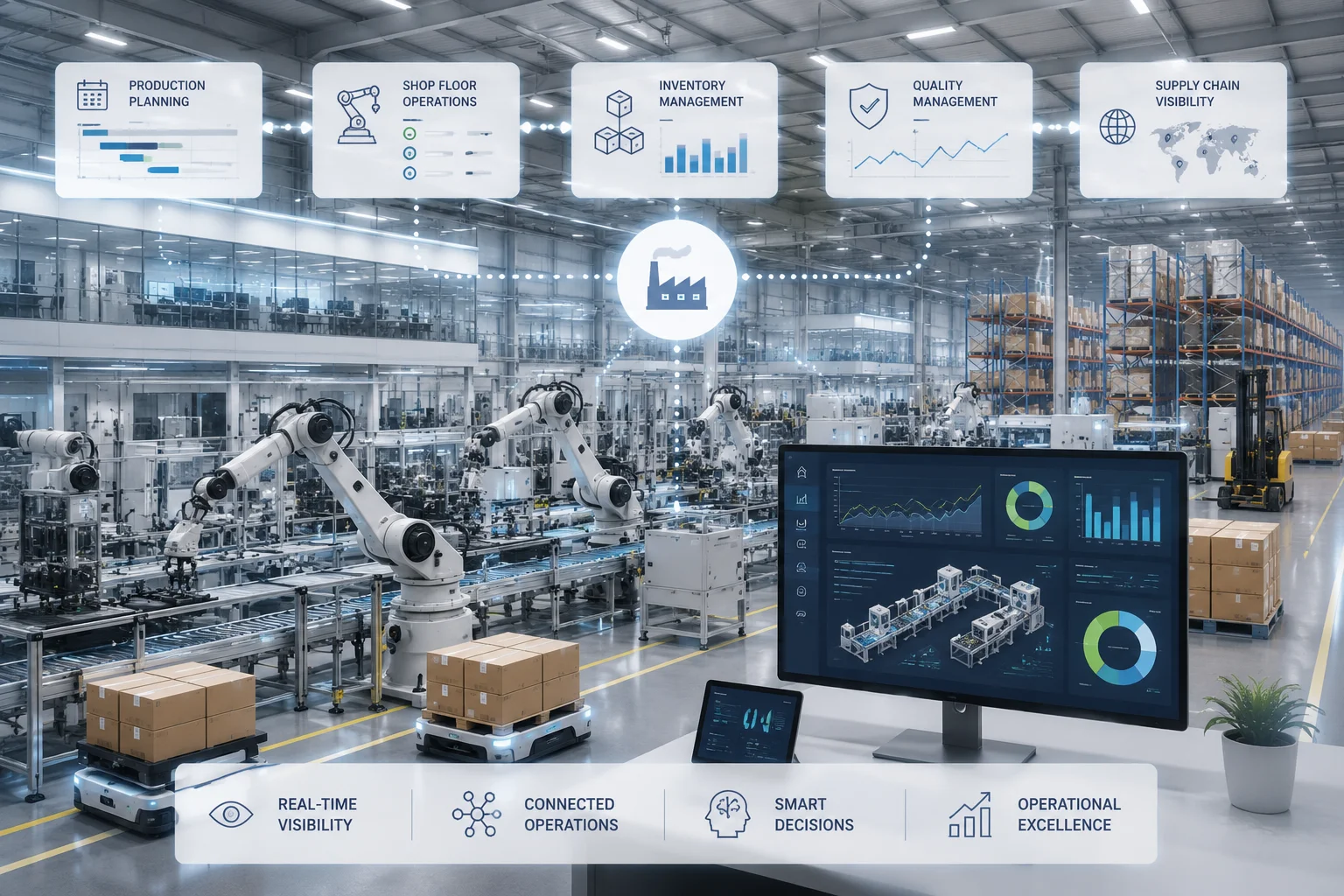
Successful manufacturers rely on accurate data, efficient processes, and connected systems to support production planning, inventory management, procurement, warehousing, financial visibility, and customer fulfillment. Modern technology platforms help unify these operations while improving visibility and decision making across the organization.
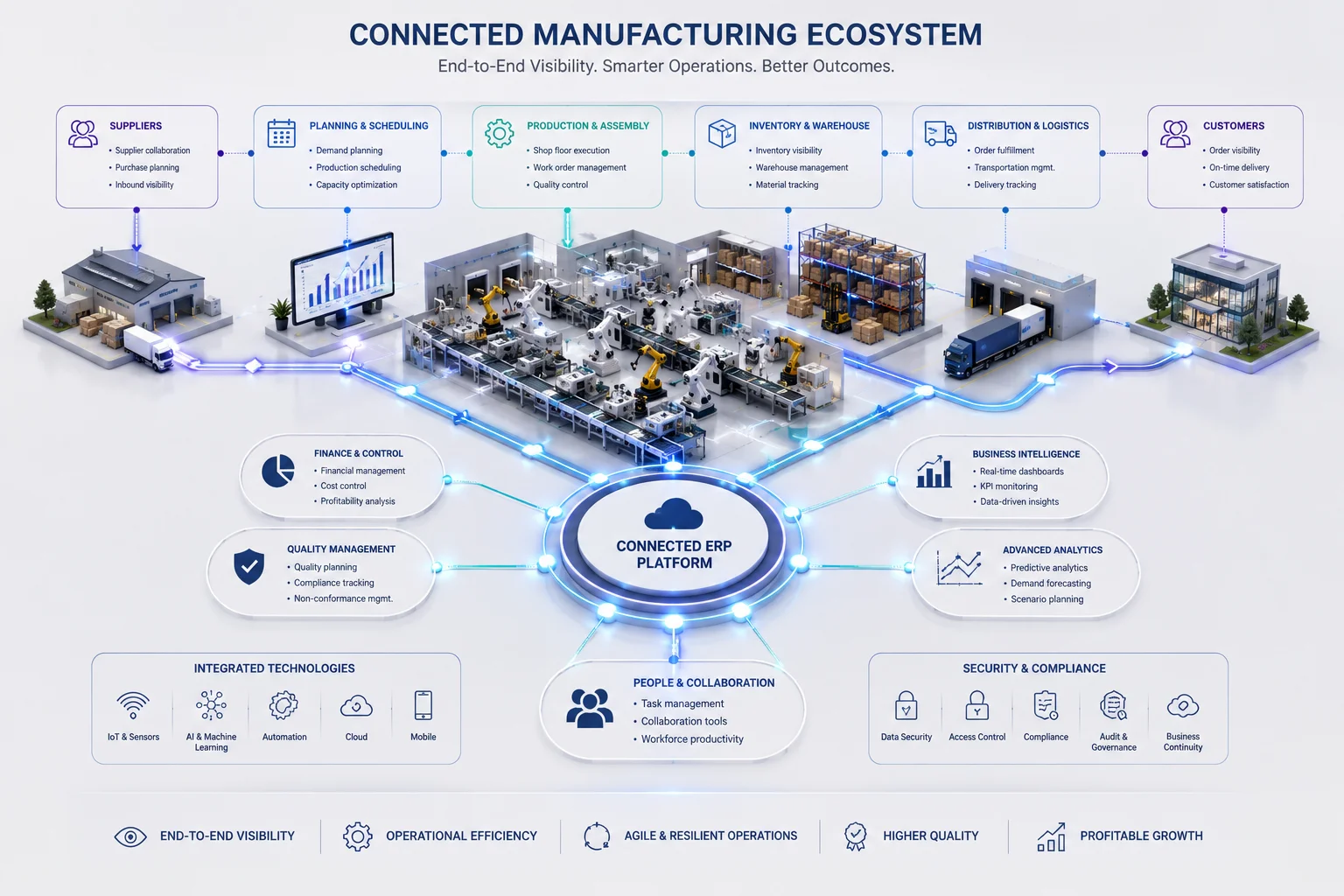
Manufacturing organizations operate in increasingly complex environments. Rising material costs, labor challenges, supply chain disruptions, customer expectations, and market volatility place significant pressure on operational performance.
Many manufacturers continue to rely on disconnected systems, manual processes, spreadsheets, and outdated technologies that limit visibility across production, inventory, procurement, and financial operations. These limitations often create inefficiencies that impact profitability and growth.
Modern manufacturing organizations require connected technology platforms that provide real time visibility across the business. By integrating ERP, supply chain, forecasting, warehousing, commerce, and reporting systems, manufacturers gain the information needed to make faster and more informed decisions.
Whether improving production planning, optimizing inventory, modernizing legacy ERP systems, or supporting future growth initiatives, manufacturers benefit from technology strategies aligned with operational goals and business objectives.
S-Metric helps manufacturers improve operational performance through technology solutions that connect critical business functions across the organization.
Improve visibility across production, inventory, purchasing, finance, and operations through integrated ERP platforms such as Dynamics 365 Business Central.
Improve resource utilization, production efficiency, and operational coordination through better planning and scheduling processes.
Increase inventory accuracy, improve warehouse efficiency, and reduce carrying costs through connected inventory and fulfillment solutions.
Improve procurement visibility, supplier collaboration, demand planning, and operational resilience across the supply chain.
Leverage forecasting capabilities to improve production planning, inventory investment decisions, and future business visibility.
Connect manufacturing operations with customer ordering platforms, dealer portals, and commerce solutions that improve customer experiences.
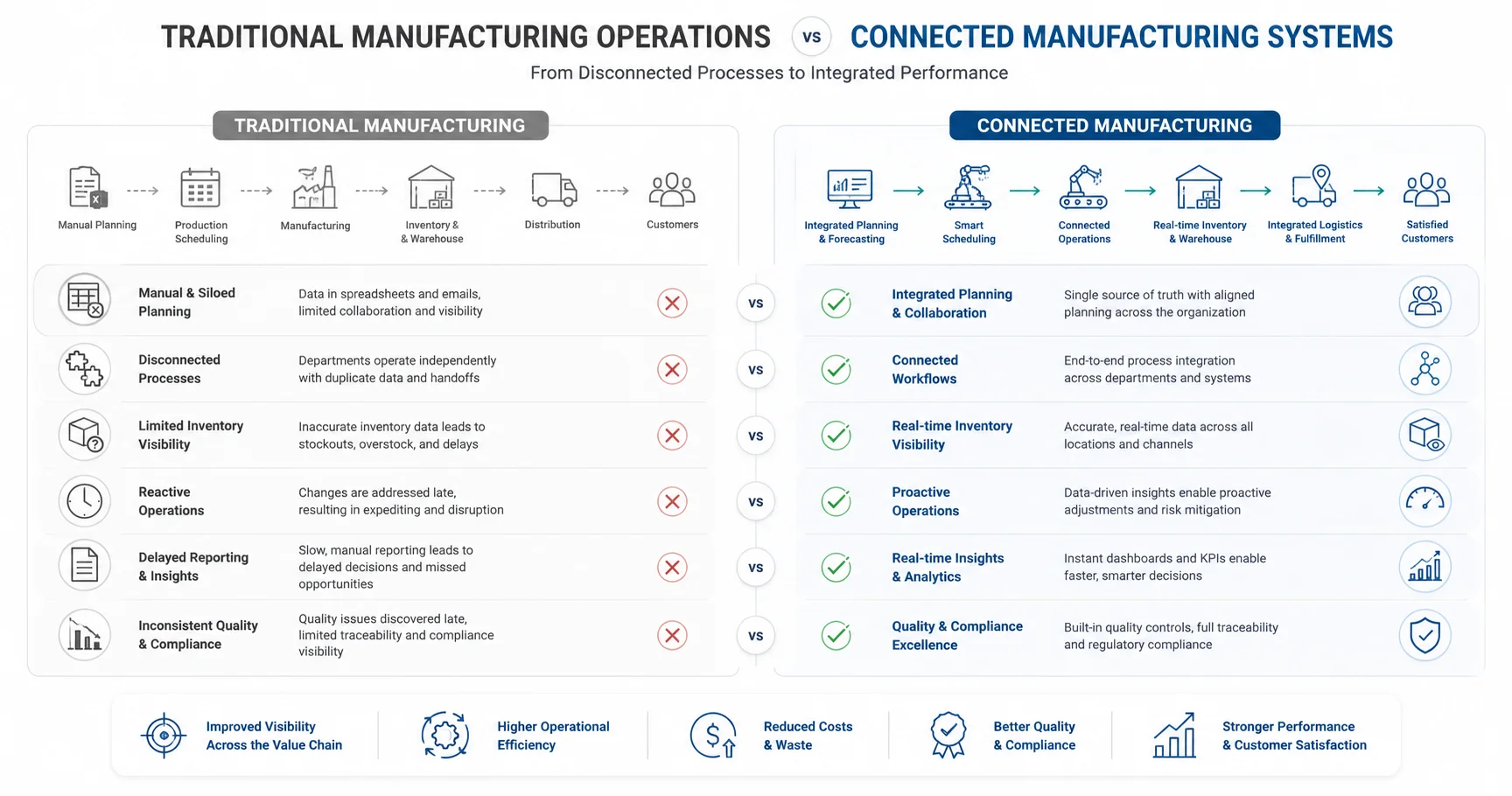
Manufacturers that rely on disconnected systems often struggle with limited visibility and inefficient processes. Connected technology platforms provide greater operational insight and support better decision making.
| Capability | Traditional Environment | Connected Manufacturing Environment |
|---|---|---|
| Production Visibility | ✕ Limited insight | ✓ Real time visibility |
| Inventory Management | ✕ Manual tracking | ✓ Integrated inventory control |
| Forecasting | ✕ Spreadsheet based planning | ✓ Data driven forecasting |
| Supply Chain Coordination | ✕ Reactive management | ✓ Proactive planning |
| Financial Reporting | ✕ Delayed visibility | ✓ Real time operational reporting |
| Decision Making | ✕ Fragmented information | ✓ Unified business intelligence |
Our manufacturing consulting services support organizations seeking to improve operational efficiency, strengthen visibility, and modernize technology environments.
Improve production planning, inventory control, and operational reporting.
Support inventory traceability, forecasting, compliance requirements, and operational efficiency.
Improve demand planning, fulfillment coordination, and customer service performance.
Increase production visibility while improving material planning and resource utilization.
Support inventory management, supplier collaboration, and operational forecasting.
Improve coordination between production, warehousing, logistics, and customer fulfillment.
Manufacturing organizations require more than software implementation. They need solutions that align with production processes, inventory management, supply chain operations, forecasting requirements, and long term business objectives.
Organizations looking for a Business Central Consultant in Los Angeles often need guidance that extends beyond ERP deployment. Our team helps manufacturers evaluate operational challenges, modernize legacy systems, improve visibility, and build technology strategies that support growth.
We also support organizations evaluating upgrades from legacy Microsoft ERP platforms including Dynamics NAV and Microsoft GP while helping establish a roadmap toward modern cloud based business applications.
Whether you're evaluating Dynamics 365 Business Central, planning a migration from Dynamics NAV or Microsoft GP, improving forecasting capabilities, or looking for an ERP consultant in Los Angeles to support manufacturing operations, we can help assess the right strategy for your business.
Manufacturers often benefit from ERP systems, forecasting tools, warehouse management solutions, supply chain visibility platforms, and reporting technologies that improve operational decision making.
Yes. Dynamics 365 Business Central provides capabilities that support production planning, inventory management, purchasing, financial visibility, and operational reporting for many manufacturing organizations.
Yes. We help manufacturers evaluate modernization strategies and migrate from Dynamics NAV and Microsoft GP environments to newer Microsoft business application platforms.
Forecasting helps manufacturers anticipate demand, optimize inventory investments, improve production planning, and reduce operational uncertainty.
Yes. Modern manufacturing solutions can integrate with warehouse management systems, transportation management platforms, forecasting tools, commerce environments, and financial applications.
Organizations improve visibility by connecting production, inventory, supply chain, warehouse, financial, and reporting systems into a unified operational environment.